A fellowship for the thesis
The day the doctoral proposal was approved by the Hellenic Foundation for Research and Innovation, and the people who made it possible. First posted in Greek on the day; this is the English version, kept as it was.
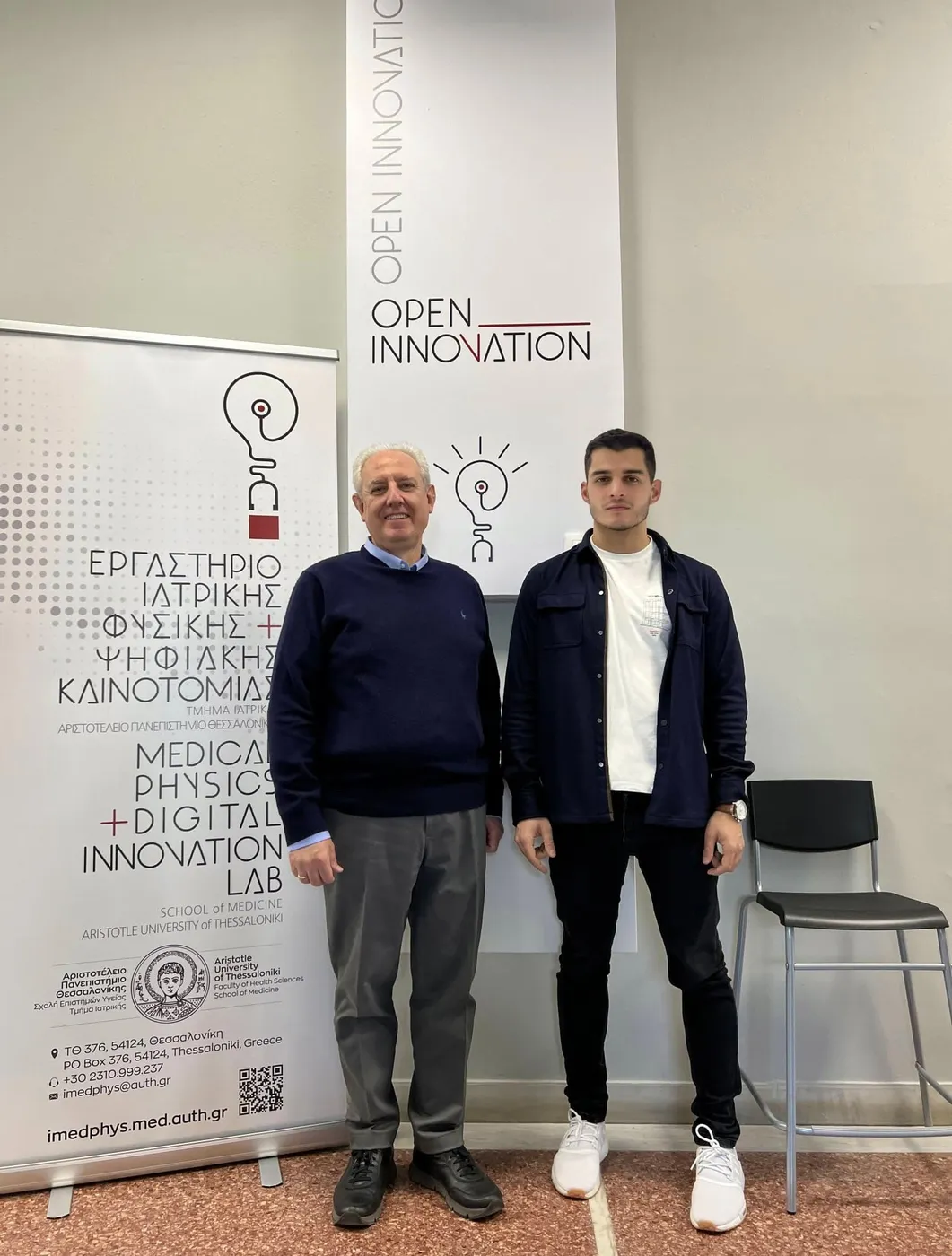
Today I am especially glad to begin the fellowship for my doctoral thesis at the School of Medicine of the Aristotle University of Thessaloniki. The proposal, "Mixed reality, biosensor and artificial intelligence technologies supporting surgery practice and education", was evaluated, approved and included in the final lists of the third call of the Hellenic Foundation for Research and Innovation.
The aims of the research are to improve the quality of surgical interventions, to assess the mental health of health professionals, and to explore the value of new technologies such as mixed reality and biosensors in the education of surgeons and in the surgical process itself.
Thank you
I want to thank the supervisors of the thesis warmly. In particular Professor Panagiotis Bamidis, professor of Medical Physics and director of the Lab of Medical Physics and Digital Innovation at AUTh, for his guidance and his trust in me, as well as Associate Professor of Surgery Georgios Tsoulfas, head of the Transplant Unit at Hippokration Hospital of Thessaloniki, and Professor of Rural and Surveying Engineering Vasileios Tsioukas, for their support. I also want to thank Christina Plomariti and Christos Frantzidis, and my colleagues at the AUTh Medical Physics and Digital Innovation Lab.
I hope that the completion of the thesis will offer new and significant evidence in its field.
Four years later
The thesis became MIDAS: a VR simulator for surgeons with a Socratic tutor that reads where the hands are, and a wearable study of surgeons' fatigue, stress and recovery around real operating days. The final pilots run this autumn and the write-up is planned for December 2026. The full page is here.