Why LLMs are spatially blind, and what we fixed on stage
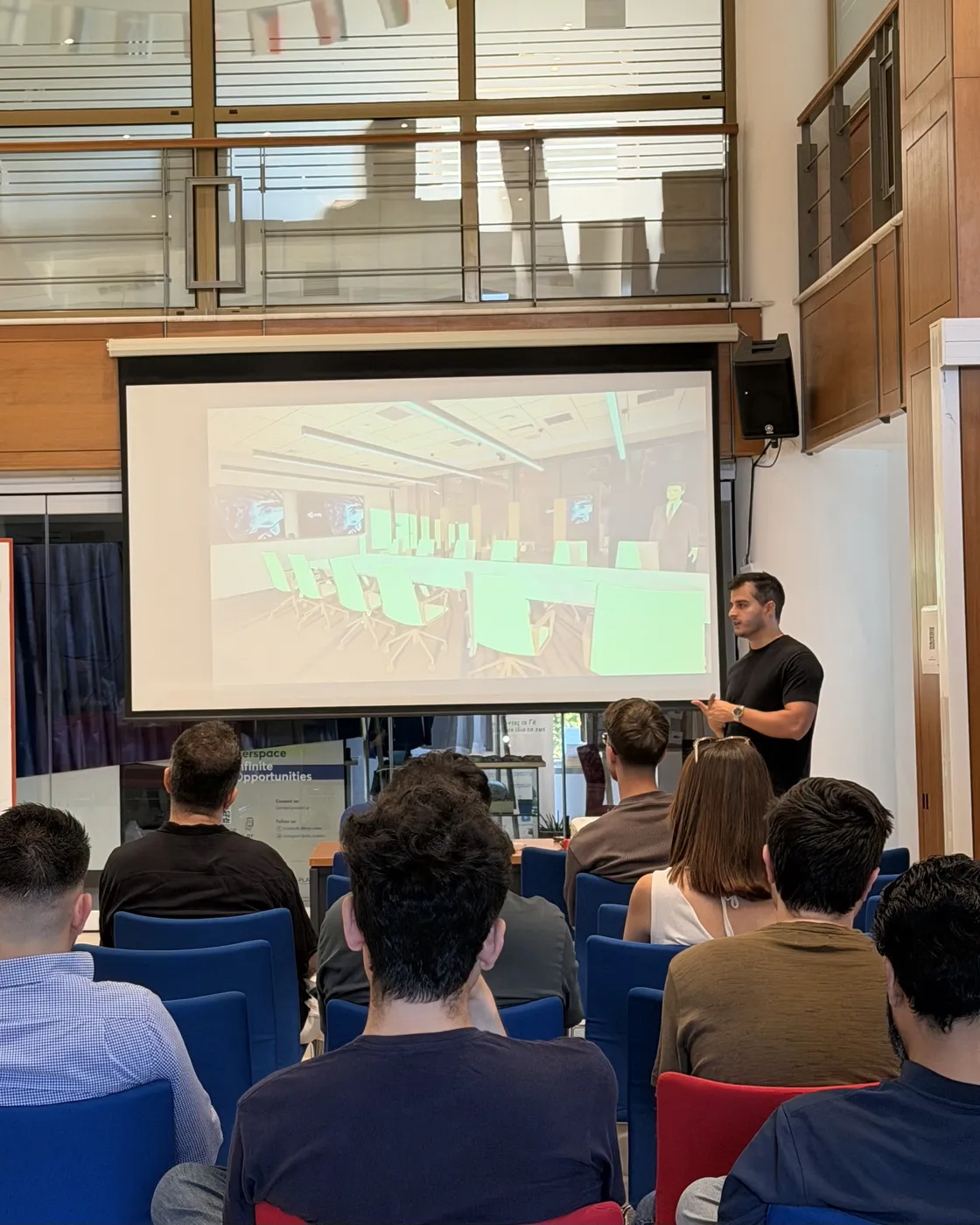
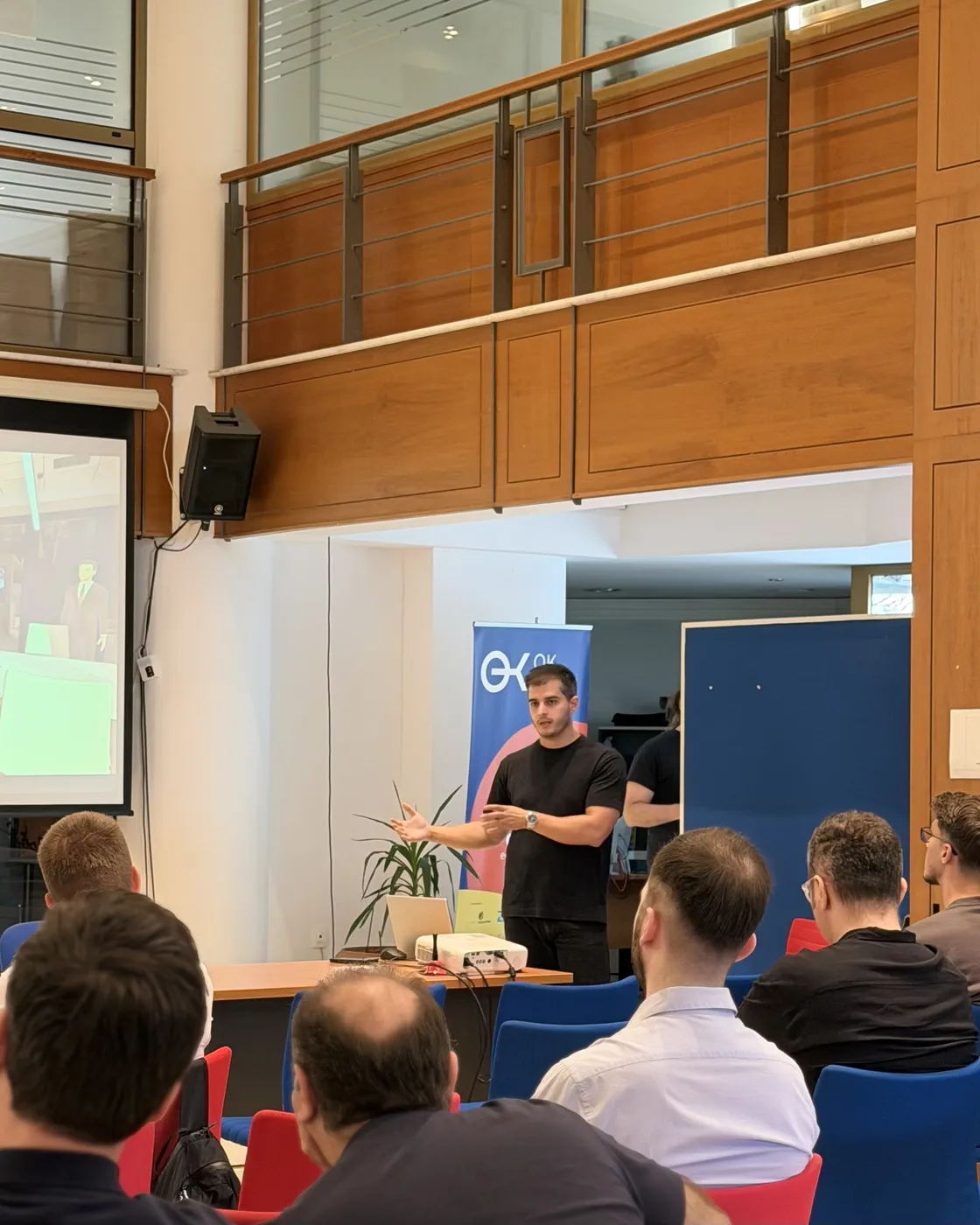
Last Friday at OK!Thess we went live. We talked about why language models are spatially blind, then we fixed it on stage: a model perceiving, reasoning and acting inside a 3D enterprise building in real time.
The problem
A language model reads tokens. It has no idea where the door is, which room is above which, or that the thing it just called a desk is two metres from the wall. Ask it to act in a building and it guesses from words. That is fine for a chat window and useless for an operations floor, a hospital corridor or a training scenario.
What we showed
We gave the model the building, not a description of it. The 3D scene exposes its state as structured data: rooms, objects, positions, what is open and what is occupied. The model gets tools to query that state and tools to act on it, and every action goes back through code that checks it before anything moves. The audience watched the model locate itself, plan a route, and carry out a task in the scene while it narrated its reasoning.
The part I cared about most was the boundary. The model proposes. Deterministic code executes. A person can stop it at any step. That is the same rule I run production systems by, and it held up on stage with a room full of engineers trying to break it.
The room
Great energy from the Thessaloniki .NET Meetup community. Sharp questions, real debate, exactly the kind of conversation this space needs right now. Thanks to the organisers and to everyone who showed up and challenged the work. That is how we build better.